V60 Measurement Stand
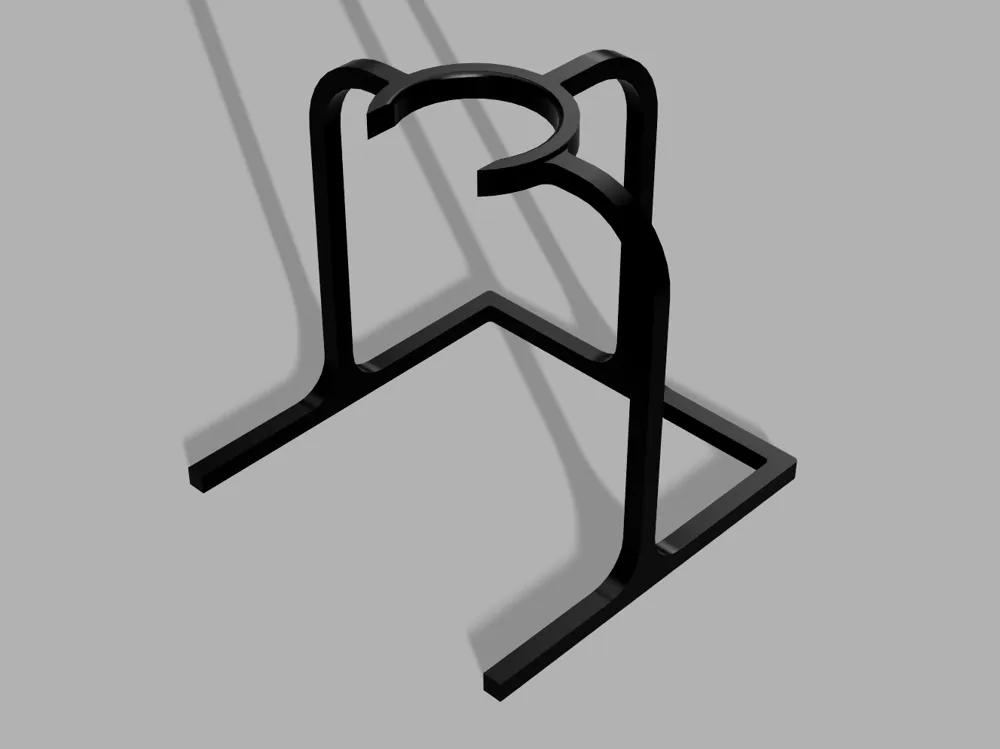
This is a V60 Measurement Stand to separate the weight of the resulting coffe (Yield) from the remaining Water in the filter (Dose) with two scales. Thus allowing direct measurement of the flow through the coffee grounds with a smart scale. See an image of such a measurement below.
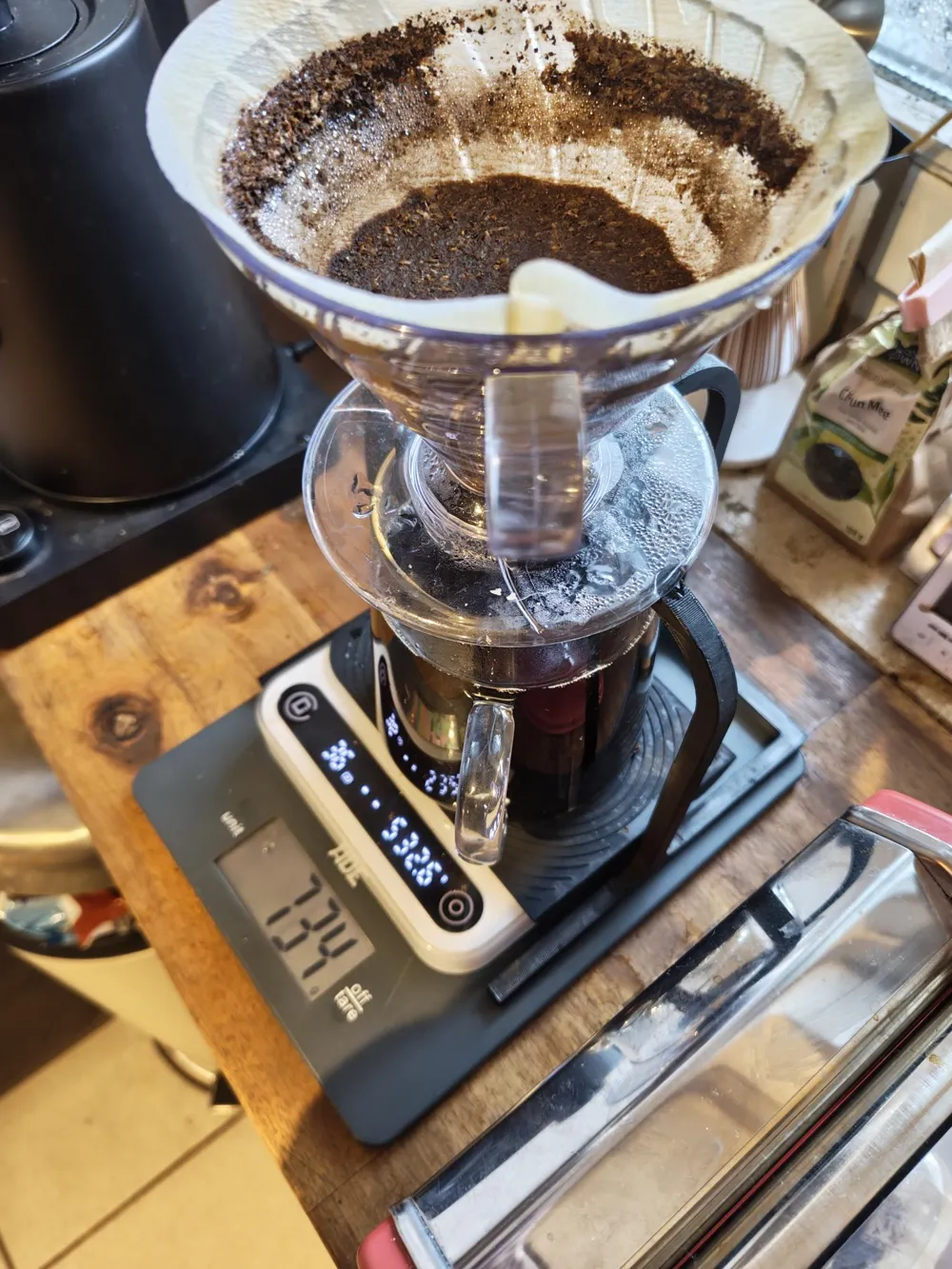
Measurement
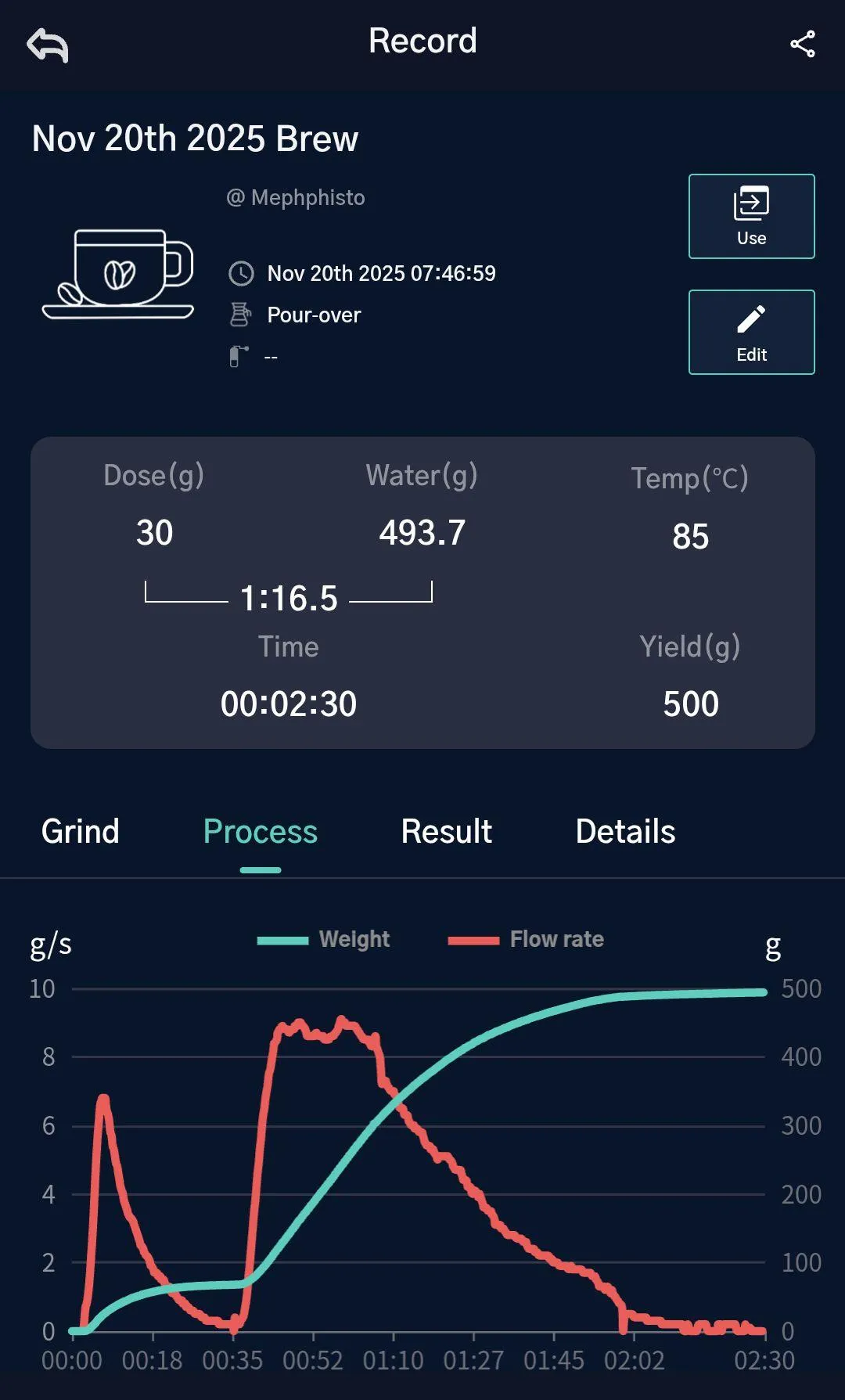
Measurement of a simple two-stage pouring structure:
| Fast pour | 100g |
| Wait / Bloom | 35s |
| Fast pour | 200g |
| Slow pour | 100g |
| Wait | till dripper empty |
Analysis
A simple assumption about the dynamic of this system would be the following differential equation:
In other words, the flow through the coffee dripper is proportional to the mass of water in the dripper, with a proportionality constant.
To verify this, we need to first verify that the flow approximation of the DiFluid scale is reasonable. We can take a simple first-order finite difference scheme to approximate flow from mass over time .

This is a very reasonable result. Indeed the DiFluid has some nice filtering compared to the simple finite difference scheme.
Now to the final measurement:

To analyze this result, we need to remember the pouring structure! Beginning from the right side of the graph, the fast 100 g pour brings up the flow, which then decays during the bloom phase. The next fast 200 g pour brings the flow back, and the slow 100g pour maintains it relatively stable. Then the flow decays again during the rundown.
We can make two interesting observations here:
- The proportionality constant vastly differs for the Bloom and the Rundown. This is due to the CO₂ being dissolved from the coffee. Here is an interesting James Hoffmann video on coffee resting, explaining it. And due to small coffee particles called fines reducing the permeability of the filter paper.
- The relationship ends abruptly before the coffee has run out. This can be explained by the surface energy of the coffee retaining some water between the coffee particles.
Conclusion
While this mathematical dabble is academically pleasing, there is also an important takeaway for everyday coffee: the dose should be larger than the yield by some amount roughly proportional to the grounds. Thus, we need to insert more water into the dripper than we want to extract; moreover, we should cut or stop the extraction before or right when the flow collapses, as the remaining water in the dripper will flow much slower, getting colder and absorbing more tannins, resulting in a bitter coffee.
